
Blue Collar Staffing Agency vs. DIY Hiring: What Actually Costs More in Indianapolis
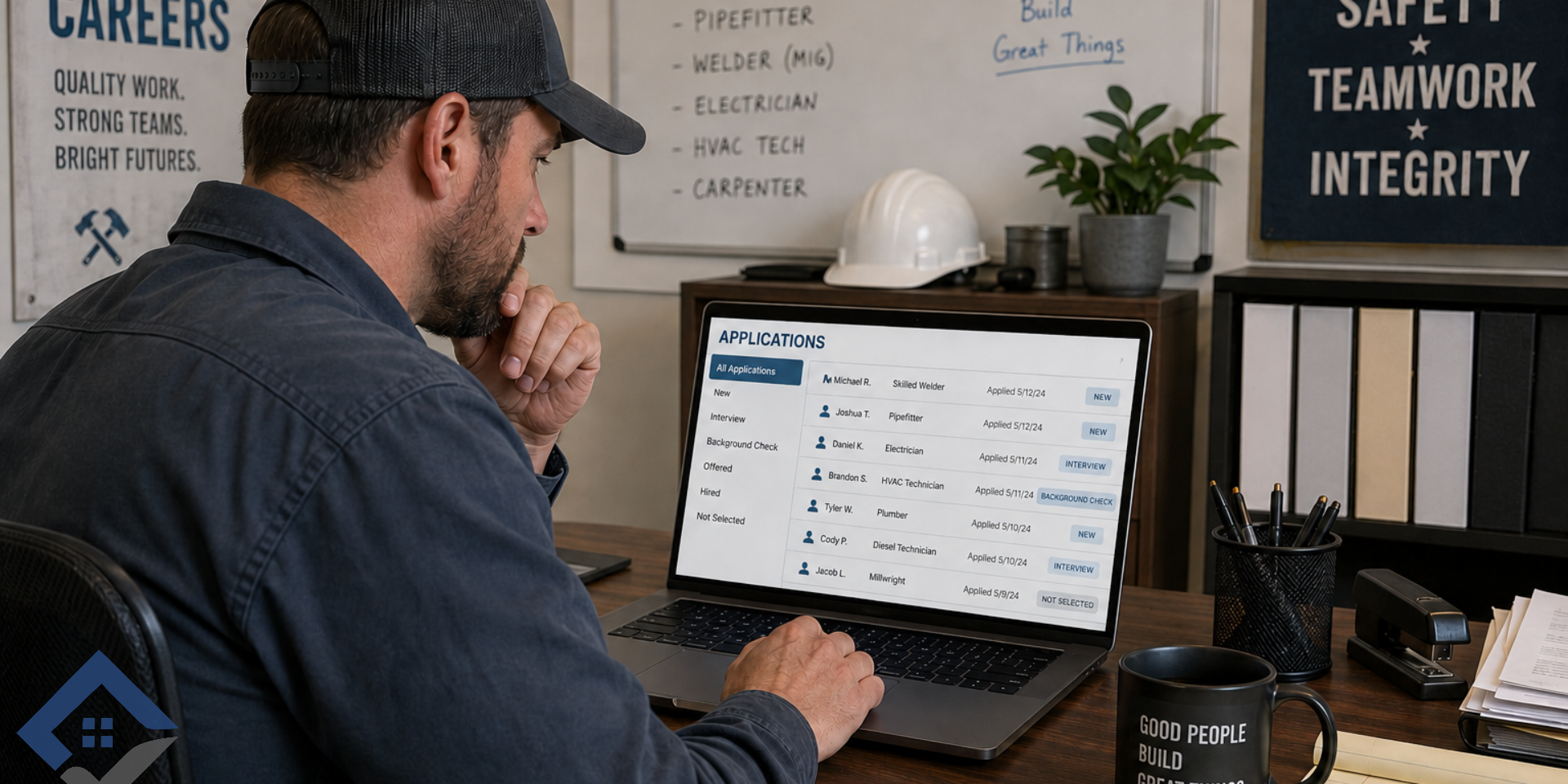
If you run operations at an Indianapolis manufacturing facility, distribution center, or construction company, and you’re handling your own hiring, you’ve probably asked yourself this: Why pay a staffing agency when I can post a job myself? It’s a fair question, until you start tracking every hour your supervisors spend screening candidates, every shift left uncovered, and every bad hire that eats a week of onboarding time before walking out the door. This post breaks down exactly where those costs accumulate so you can make a clear-headed decision.
The Real Price of a “Free” Job Posting
Posting to a job board feels low-cost because the fee is small or zero. But the posting itself is only the beginning. Someone on your team, likely a supervisor or HR generalist, has to read applications, make phone calls, schedule interviews, run background checks, and verify credentials. In a warehouse or trades environment, that’s time pulled away from production, not administration.
One pattern we see consistently among Indianapolis employers who self-manage blue-collar hiring: they dramatically underestimate how many applicants they must screen to land one reliable hire. For hourly production and warehouse roles, the funnel is wide and the drop-off at each stage is steep. What looks like a straightforward hire often turns into ten or more days of back-and-forth before anyone shows up for a first shift.
An Illustrative Look at the Real Costs
Consider a hypothetical Indianapolis fabrication shop we’ll call Meridian Industrial, a 60-person operation that needs to fill three machine operator positions and decides to handle recruiting in-house. A floor supervisor spends several hours each week reviewing applications and making callbacks, pulling him partially off the floor. Scheduling interviews cuts into production time. After a string of no-shows and one candidate who doesn’t pass the background check, they make two offers. One hire quits after two weeks. Six weeks in, they’re back to square one with ongoing production gaps and overtime running on the remaining crew.
This scenario is illustrative, but the pattern it reflects plays out regularly across Central Indiana. The costs aren’t just the hours spent recruiting, they include overtime paid to workers covering open shifts, reduced throughput during the vacancy window, and the full onboarding cost for a hire who didn’t stay past the first month.
What a Blue Collar Staffing Agency Actually Costs, and What That Fee Covers
A staffing agency charges a markup on the hourly wage or a placement fee, depending on the arrangement. That number is visible and easy to compare against your internal labor rate. What’s harder to see is everything bundled inside it: pre-screened candidates, background checks already completed, verification of relevant certifications, and workers who have been matched to your industry and shift requirements before they arrive.
For blue-collar hiring in Indianapolis, the local labor market in 2026 remains genuinely competitive. Skilled trades, production, and warehouse roles aren’t quick to fill, especially for swing shifts or positions requiring specific equipment experience. An agency that specializes in this space maintains an active pipeline, which means they can often place a qualified worker in days rather than weeks.
The Hidden Costs DIY Hiring Rarely Accounts For
When Indianapolis employers calculate hiring costs, they typically factor in the job board fee and maybe a few HR hours. Rarely do they capture the full picture:
-
Supervisor time diverted from production to conduct interviews and return applicant calls
-
Overtime costs accrued while the position sits open for two, three, or four weeks
-
Lost productivity from undertrained or mismatched new hires during their ramp-up period
-
Turnover costs when a hire leaves within 30 to 90 days
-
Administrative burden, I-9 verification, payroll setup, and onboarding paperwork, for every new hire who cycles through
When you hire through an agency on a temp-to-hire arrangement, several of those administrative tasks stay with the agency during the trial period. Payroll processing, workers’ comp coverage, and initial onboarding paperwork shift off your team’s plate. Your supervisors evaluate the worker’s performance while someone else manages the compliance overhead.
When DIY Hiring Works, and When It Doesn’t
DIY hiring isn’t always the wrong call. For salaried leadership roles or highly specialized positions where your team already has a deep recruiting network, managing the search internally can be the right move. If you have a dedicated HR team with real bandwidth and strong applicant tracking tools, you may run an efficient process for select positions.
Where DIY consistently struggles is high-volume, time-sensitive hourly hiring, which is exactly the segment that defines most blue-collar operations in Indianapolis. If you need to fill multiple production or warehouse roles quickly, or if a coverage gap costs you real money each week it drags on, the efficiency argument for a staffing agency becomes hard to dismiss. Browse blue-collar positions currently being placed in the Indianapolis market to get a clearer sense of where candidate demand and employer competition stand right now.
Run This Cost Audit Before Your Next Open Position Goes Live
Don’t guess at the comparison, run the numbers for your own operation using these four steps:
-
Estimate how many supervisor hours your last comparable hire consumed from first application review to first day worked. Multiply by the hourly cost of that supervisor’s time.
-
Calculate your average overtime cost per week when a position stays open beyond two weeks.
-
Identify your 30- and 90-day turnover rate for hourly workers hired through your current process, and estimate what each early departure costs you in recruiting and training.
-
Add those figures together and compare them against a staffing agency’s markup or placement fee for the same role type.
For most Indianapolis operations running lean on headcount and margin, the math shifts faster than expected. Start that audit now, before the next vacancy creates another scramble, so your decision is based on real numbers, not assumptions about what agency services cost relative to doing it yourself.
Ready to Know What Hiring Is Actually Costing Your Operation?
The Blue Collar Recruiter Indy South works with Indianapolis-area employers in manufacturing, warehousing, logistics, and skilled trades who need qualified workers placed without the compounding costs of a drawn-out search. Reach out to our team to talk through your current hiring challenges and get a straight answer on whether a staffing partnership makes financial sense for your specific operation and workforce needs.
For a national comparison of these numbers, see blue collar staffing agency vs. DIY hiring: what actually costs more.
Share this post
More Resources
You are one click away from launching a rewarding trade career.